

Timor-Leste Joins ASEAN: The Future Ahead
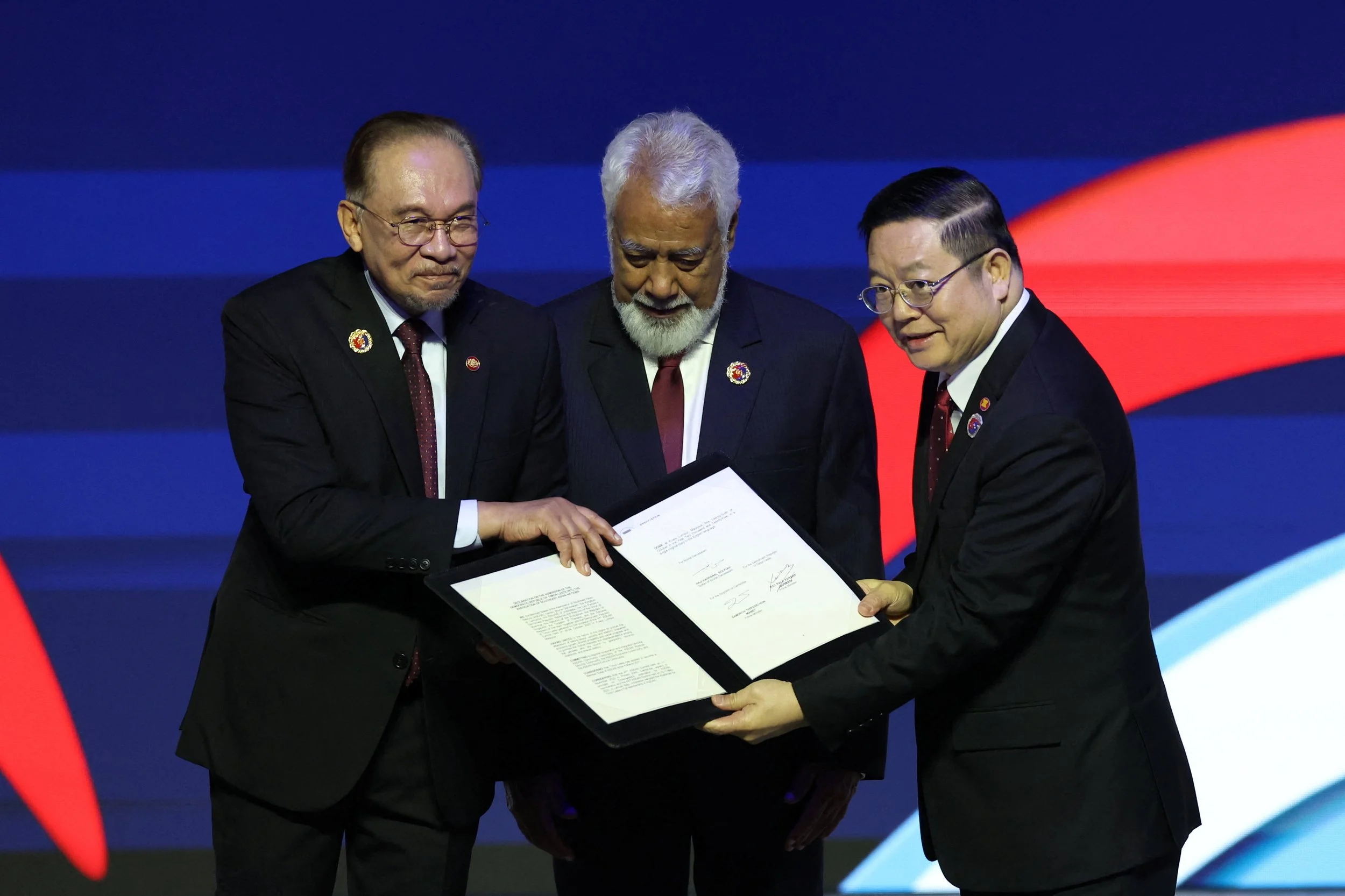
Image © Reuters. Used for editorial purposes only; all rights reserved.
By Huzil Afwa, Director of ASEAN Affairs - 8/23/26
Introduction
October 26, 2025 marks a significant milestone for the Association of Southeast Asian Nations (ASEAN) as it welcomes its 11th member, Timor-Leste, as the latest Southeast Asian country to join. Timor-Leste, an island country about the size of Connecticut, would be the second-smallest ASEAN member with a population of 1.4 million. It was no easy path for the small nation, which waited 14 years for its accession. Joining ASEAN means a great deal to Timor-Leste, as it provides opportunities to diversify its economy away from oil and gas, attract foreign investment, and create jobs for its youthful population. Other members of ASEAN will also benefit from expanded market access and Timor-Leste’s strategic maritime position. Despite these prospects, the Southeast Asian bloc should keep in mind the emerging challenges of such accession, particularly economic and social pressures, including the potential impact of increased imports from other member countries on Timor-Leste’s developing industries, high youth unemployment, and political instability. These challenges raise questions about whether Timor-Leste can uphold the organization’s institutional commitments and whether accession can generate mutual benefits that enhance economic opportunities and contribute to a secure and stable Southeast Asia.
Background
Building upon 23 years of Indonesian occupation, Timor-Leste’s journey to ASEAN was filled with immense challenges. From 1975 to 1999, ASEAN members denied its sovereignty as they committed to the non-interference code of conduct, avoiding involvement in Indonesia’s “internal matters.” In 2002, Timor Leste finally restored its independence, and the young nation applied for ASEAN membership in 2011. Despite establishing a relatively robust democratic system, it was denied entry by several ASEAN members based on skepticism of its readiness due to domestic development challenges. Singapore was among the most cautious, arguing for many years that Timor-Leste lacked the administrative capacity and economic development necessary to meet ASEAN institutional obligations and regional economic commitments. Myanmar also resisted Timor-Leste’s accession in retaliation of its public criticism of Myanmar’s military junta human rights abuses following the 2021 coup. It was only in 2022 that Timor-Leste's application was accepted, granting the country observer status and permission to attend ASEAN meetings. Another three years passed before Timor-Leste official accession at the 47th ASEAN Summit in 2025, becoming the poorest members of the organization.
Benefits for Timor-Leste and ASEAN
Timor-Leste’s accession to ASEAN has multiple benefits to both the nation and the group. For Timor-Leste, joining ASEAN could help diversify its economy, which currently relies on oil and gas for 80-85% of government revenue. By gaining easier access to the ASEAN market of 700 million people, sectors such as fisheries, tourism, and coffee production could expand exports and tap new demand. Cheaper, higher-quality goods from other ASEAN countries, especially agricultural and consumer products, can support local development as local industries adapt to regional comparative competition.
On security, joining ASEAN could allow Timor-Leste to gradually reduce its dependence on Australia for security assistance, as regional partners take a more active role in supporting stability through the ASEAN Political-Security Community (APSC), which promotes regional cooperation on maritime security, transnational crime, and law enforcement. Similarly, Timor’s accession benefits ASEAN economically by enabling closer maritime cooperation and enhancing trade connectivity given the nation’s strategic location between Southeast Asia and Australia. Such cooperation also strengthens maritime security and supports the sustainable management of marine resources. With its Melanesian heritage and Portuguese influence, Timor-Leste also broadens ASEAN’s cultural spectrum, moving the organization away from a Malay-centric identity and fosters cultural diversity.
Challenges Ahead
Beyond the positive prospects, several challenges remain. Socioeconomic challenges remain among the main concerns. Although Timor-Leste will enjoy greater access to cheap, quality products from ASEAN, the influx of foreign goods could outcompete and negatively affect developing domestic sectors such as agriculture, with local farmers risking losing significant market share to foreign products. This could widen the existing trade imbalance, as Timor-Leste already imports more than eleven times its exports. In addition, approximately 43% of the population lives below the national poverty line, contributing to social discontent. Therefore, targeted safeguards need to be put in place to ensure that nascent sectors remain protected during the early stages of their development before they are ready to compete in the broader regional market. Timor-Leste has approved a trade remedies framework that allows temporary safeguards against import surges and unfair trade practices to better prepare for ASEAN integration. However, current limitations in regulatory oversight and weak governance make it difficult to monitor rising trade, posing risks of black markets and other illicit activities.
Timor-Leste’s vulnerable political institutions, which remain exposed to instability and periodic unrest, also pose a challenge following accession. Since its independence, Timor-Leste has experienced violent political unrest and parliamentary deadlock following the 2017 elections. Such political instability could make it more difficult for Timor-Leste to meet its ASEAN commitments and effectively implement regional agreements.
Areas of Future Cooperation
There are several areas where Dili’s accession opens new avenues for cooperation. One area is the blue economy, which focuses on using ocean resources sustainably to support economic development. Timor-Leste possesses a 29,000 mi² Exclusive Economic Zone (EEZ), and the government has expressed strong interest in developing its national blue economy. This aligns with ASEAN’s growing focus on maritime sustainability and the blue economy, as highlighted at the 38th ASEAN Summit. Agriculture is another key area of cooperation. Timor-Leste’s agricultural sector continues to face declining productivity and investment. ASEAN can help address these challenges, particularly as the 44th ASEAN Summit of Ministers on Agriculture and Forestry discussed guidelines and strategies to transform member states' agricultural sectors.
Furthermore, Timor-Leste has the lowest Human Capital Index in the region and ranks low on literacy and secondary education. Access to ASEAN University Network (AUN) and educational exchange programs can help reduce this gap and help Timor Leste to cultivate its domestic human capital. The Initiative for ASEAN Integration (IAI), programs to help new members meet obligations and narrow development gaps, can also provide Timor-Leste ministries and agencies intensive English training in negotiation, presentation, and public speaking, which would help officials participate more effectively in ASEAN meetings.