

Rare Earths, Rare Accountability: Myanmar’s Resource Curse Under China’s Shadow
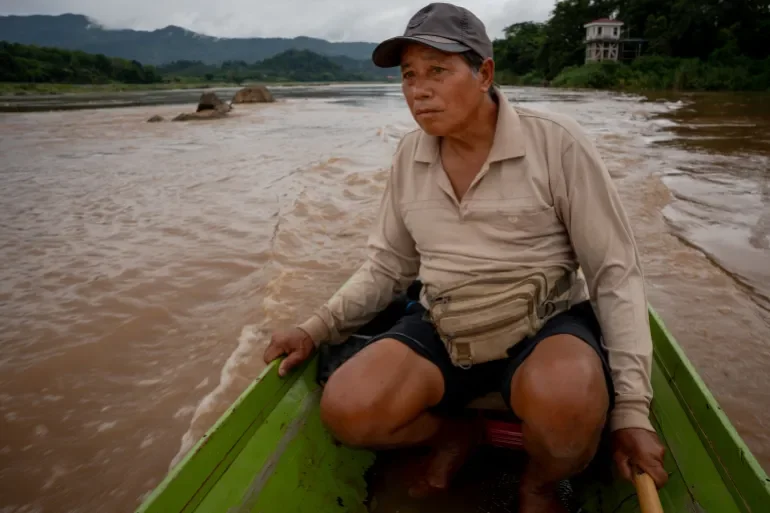
Image © Al Jazeera.
By Rebecca Jin, Directorate of China Affairs - 8/23/26
Since Myanmar’s military coup in 2021 and the subsequent, ongoing civil war, the country’s northern borders have become a critical front in both armed conflict and resource extraction. In 2024, the Kachin Independence Army (KIA), an ethnic armed organization (EAO) with a decades-long history of resisting Myanmar’s military junta, seized control of two strategic towns in Kachin State, a northern state bordering China. These towns are not only militarily significant but also sit atop some of the world’s richest deposits of rare earth elements (REEs). Following the KIA’s takeover, mining in the region surged dramatically, prompting not only a significant shift in local power dynamics but also triggering wide-scale environmental disaster.
Rare earth elements refer to a group of 17 metals. Among them, heavy rare earths like dysprosium and terbium, found in northern Myanmar, are particularly valuable due to their role in the manufacture of permanent magnets, wind turbines, and electric vehicles. As the global economy races toward green energy transitions, the demand for rare earths has skyrocketed, elevating their geopolitical and economic importance.
Following the success of its 2024 campaign, the KIA emerged not only as a powerful armed actor but also as the de facto governing authority over one of the world’s largest supplies of heavy REEs. Initially, China resisted negotiating with the KIA directly, but by late 2024, Beijing resorted to a pragmatic stance and struck deals to resume rare earth trade under KIA-imposed conditions. This agreement marked a rare instance of the Chinese government engaging directly with a non-state armed group through official platforms, including the Chinese People’s Political Consultative Conference (中国人民政治协商会议), and exemplifies China’s willingness to bypass Myanmar’s military regime when strategic resources are at stake.
This resource-based leverage has allowed the KIA to finance its military operations and expand its administrative apparatus. The group now collects export taxes, oversees mining regulations, and uses the revenue to strengthen its territorial control. With China’s tacit recognition and mineral dependence, the KIA has gained not only revenue but also political legitimacy. Other EAOs are closely watching this development, and those who have rich mineral reserves may pursue similar strategies to assert autonomy and extract concessions as the civil conflict in Myanmar prolongs.
While China outsources its environmental burdens and the KIA consolidates its regional control, both capitalize on the chaotic civil war at the cost of Myanmar’s land, water, and people, who bear the cost. Rare earth extraction is among the most damaging forms of mining, involving the use of carcinogenic chemicals, the release of radioactive waste, and widespread soil and water contamination. Unlike conventional surface mining, it relies on a chemical separation process that uses toxic substances such as sulfuric acid and hydrochloric acid to isolate rare earth elements from the ore. These environmental costs have become too high for China to tolerate domestically, leading to the outsourcing of “dirty” mining to countries like Myanmar, where environmental regulations are weak and enforcement is virtually nonexistent.
Rare earth elements in Myanmar flow through a chaotic network of actors: Chinese processors, borderland militias, exploited migrant workers, transnational smuggling operations, and the military junta itself. So far, profit or political advantage is being prioritized, while environmental and human costs remain largely dismissed. The international community has paid lip service to the ground-level consequences of the rare earth trade, focusing mainly on the strategic calculus of supply chains and great-power rivalry.
Despite growing efforts to diversify its supply chains, China remains vulnerable to disruptions in Myanmar. These structural dependencies explain Beijing’s preference for negotiated access over disengagement, even as it reaffirms its principle of non-interference. This strategy also reflects broader geopolitical shifts: the rare earth standoff has unfolded in parallel with escalating U.S.–China trade tensions. In response to U.S. tariff hikes, Beijing has introduced increasingly restrictive measures on rare earth exports. While peripheral to many outside observers, Myanmar’s northern corridor has become a critical pressure point in this global contest.
Given the neighboring stakeholders affected, there is room for regional coordination. Cambodia, Thailand, Laos, and Vietnam have already experienced deteriorating water quality of the Mekong, and if the damages worsen, it could unite all to take action against both China and the KIA, although their leverages remain limited. For the U.S. and international community, publicly highlighting China’s hypocrisy on rare earth mining can help apply diplomatic pressure. However, substantial economic sanctions from ASEAN member states are unlikely unless regional economic leaders such as Thailand and Vietnam coordinate in collective action. In this context, regional environmental civil society and local non-profits should prioritize multilateral coordination, particularly through the United Nations Security Council and ASEAN, while urging neighboring states to adopt ethical sourcing standards throughout their supply chains with use of financial penalties. However, until meaningful reforms are implemented, Myanmar’s rare earth sector will likely continue to operate in a vacuum of regulation and accountability.